



A Parent's Guide to Gender-Questioning Child
Your child just told you something big. This guide from our clinical lead walks you through what comes next: how to listen in the first few weeks, where to find support, what social transition looks like, what medical guidelines actually say, and how to check the laws in your state. You don't need all the answers. You just need to stay close.

Thinking Long-Term: What Patients Ask About Staying on Hormone Therapy
Thinking years ahead? Here’s what patients typically ask about staying on hormone therapy long-term — and what ongoing care looks like.
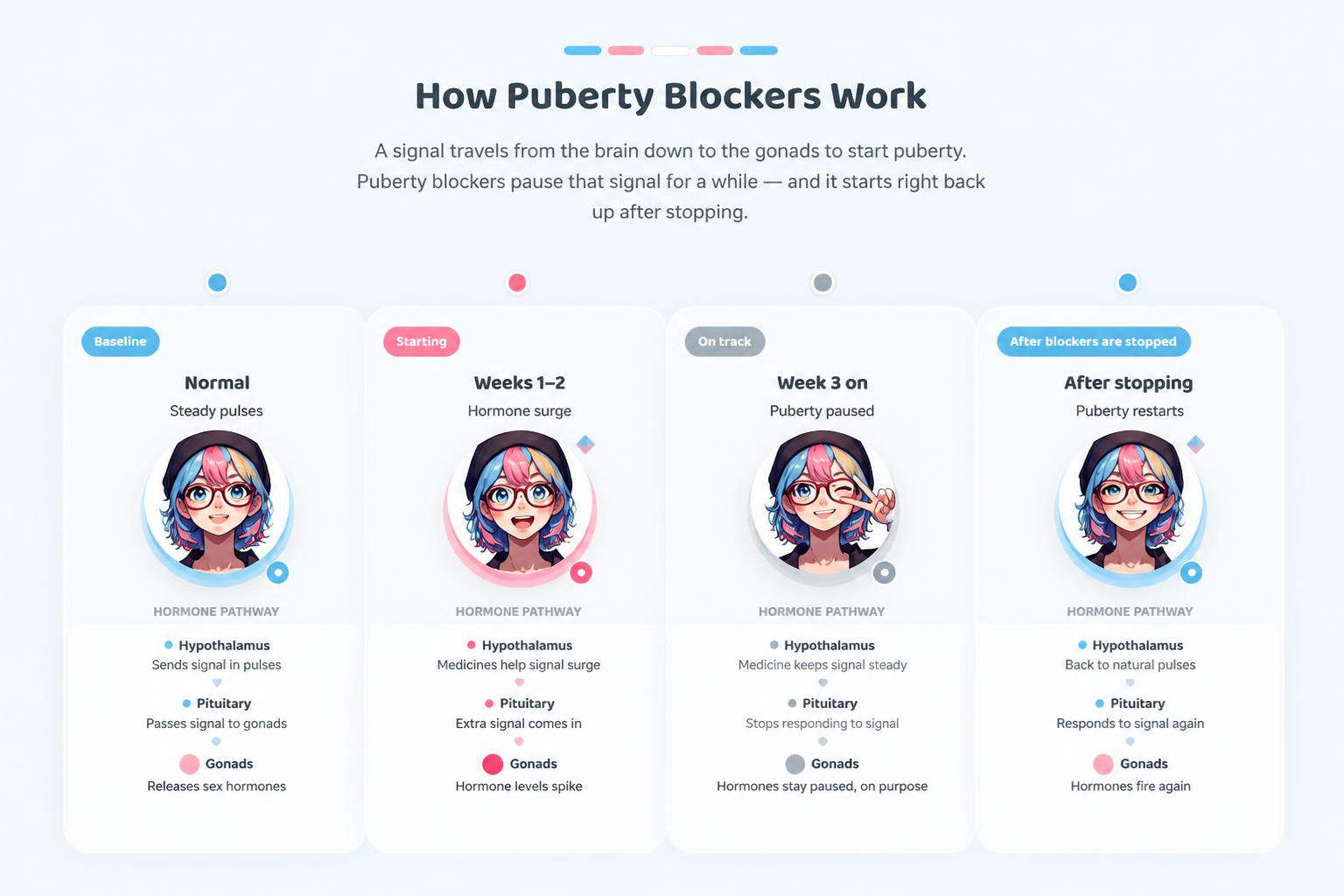
Puberty Blockers: What They Are and How They Work
Puberty blockers get talked about a lot, but rarely explained clearly. Our Clinical Lead breaks down what these medicines actually do, how they've been used safely for decades, and what happens if someone decides to stop.

Hormone Therapy Eligibility: Does Your Health History Matter?
Wondering if a health condition affects your eligibility for hormone therapy? Here's what providers actually look at, and what it usually means for your care.

How Families Navigate These Conversations Together
If your teen has brought up hormone therapy, here’s what an honest, age-appropriate conversation — and process — can look like.

Starting Hormone Therapy in College: What to Know About Privacy
Living in a dorm or with roommates? Here’s how to start care privately — deliveries, appointments, and what stays confidential.

Checking In: How to Revisit Your Goals Mid-Year
Six months into care? That’s not a random milestone — it’s actually a meaningful point to pause and ask: how is this going, for me, right now?

What to Expect at Your First Virtual Appointment
You booked the visit. Now comes the part nobody explains well: what actually happens.
If you’re the kind of person who likes to know what’s coming, this is for you. No vague reassurance, just the real sequence, start to finish. Here’s the real order of operations, start to finish:

What Gender-Affirming Care Really Means (and Why It Matters)
“Gender-affirming care” is a phrase that’s often used, but not always clearly defined.
For some, it’s associated with specific treatments. For others, it’s part of broader conversations about healthcare, identity, and access. But at its core, gender-affirming care is about something simple: receiving healthcare that respects who you are.
Here’s what that means—and why it matters.

Pride Is About Care, Not Just Celebration
Pride is often associated with celebration—parades, visibility, and community. And those things matter.
But Pride has always been about more than visibility. At its core, Pride is about access. Safety. Dignity. The ability to exist—and to be cared for—without having to justify it.
Healthcare is part of that.

How Affirming Care Helps Ease Dysphoria
A common question is: Can affirming care help with dysphoria—and the emotional weight that comes with it?
For many people, the answer is yes. Not because care removes every difficulty, but because it can reduce a specific kind of tension that’s been present for a long time.
Here’s what that can look like.

Can I See True U Clinic If I Have Medicaid?
True U Clinic is self-pay only — we don't bill Medicaid or any other insurance. But if you have Medicaid, whether you're able to self-pay for care depends on your state. Some states allow Medicaid recipients to pay out of pocket for services; others don't.

How Hormone Therapy Can Affect Mood — What Patients Report
When people think about hormone therapy, they often focus on physical changes. But for many, one of the most noticeable shifts is emotional.
A common question is: How will hormone therapy affect my mood?
The answer is personal and varied. Hormone therapy can influence mood in ways that feel stabilizing, surprising, or sometimes uncertain—especially in the early stages.
Here’s what people often report, and how to approach these changes with care.

Hormone Therapy & Fertility: Your Questions Answered
Many people ask: Does hormone therapy cause infertility?
The answer isn’t a simple yes or no. Hormone therapy can affect fertility in different ways, and those effects can vary depending on the type of treatment, how long it’s used, and individual biology.

Is Hormone Therapy Reversible? What to Know Before Starting
One of the most common questions people ask before starting hormone therapy is: Is it reversible? Here’s what to know.

Low-Dose Hormone Therapy: What Microdosing Can Look Like
Low-dose hormone therapy offers flexibility and choice. Learn what microdosing estrogen or testosterone can look like in practice.

Hormone Therapy for Nonbinary People: What Are Your Options?
Hormone therapy isn’t one-size-fits-all. Learn what hormone therapy options can look like for nonbinary and genderfluid people.

What Hormone Therapy Actually Costs (and Why It Varies)
Hormone therapy costs vary based on care needs, labs, and follow-ups. Here’s what affects gender affirming care clinic cost and how to plan.

Can You Start Hormone Therapy Without Insurance? Yes — Here’s How
You don’t need insurance to access hormone therapy. Learn what options exist for starting gender affirming care without coverage.

Online Gender Affirming Care Is Real Healthcare — Here’s How It Works
Telehealth hormone therapy is real, regulated healthcare. Learn how virtual gender-affirming care works and what to expect.